A Non-Custodial Alternative to Pionex for TradingView Automation
If you have searched for a non-custodial Pionex alternative, you are probably weighing a real trade-off: Pionex bundles trading bots and an exchange into one a...
Read more
A 3Commas non-custodial alternative for TradingView automation: what non-custodial really means, how a relay differs from a full bot platform, and how to migrate with trade-only keys.
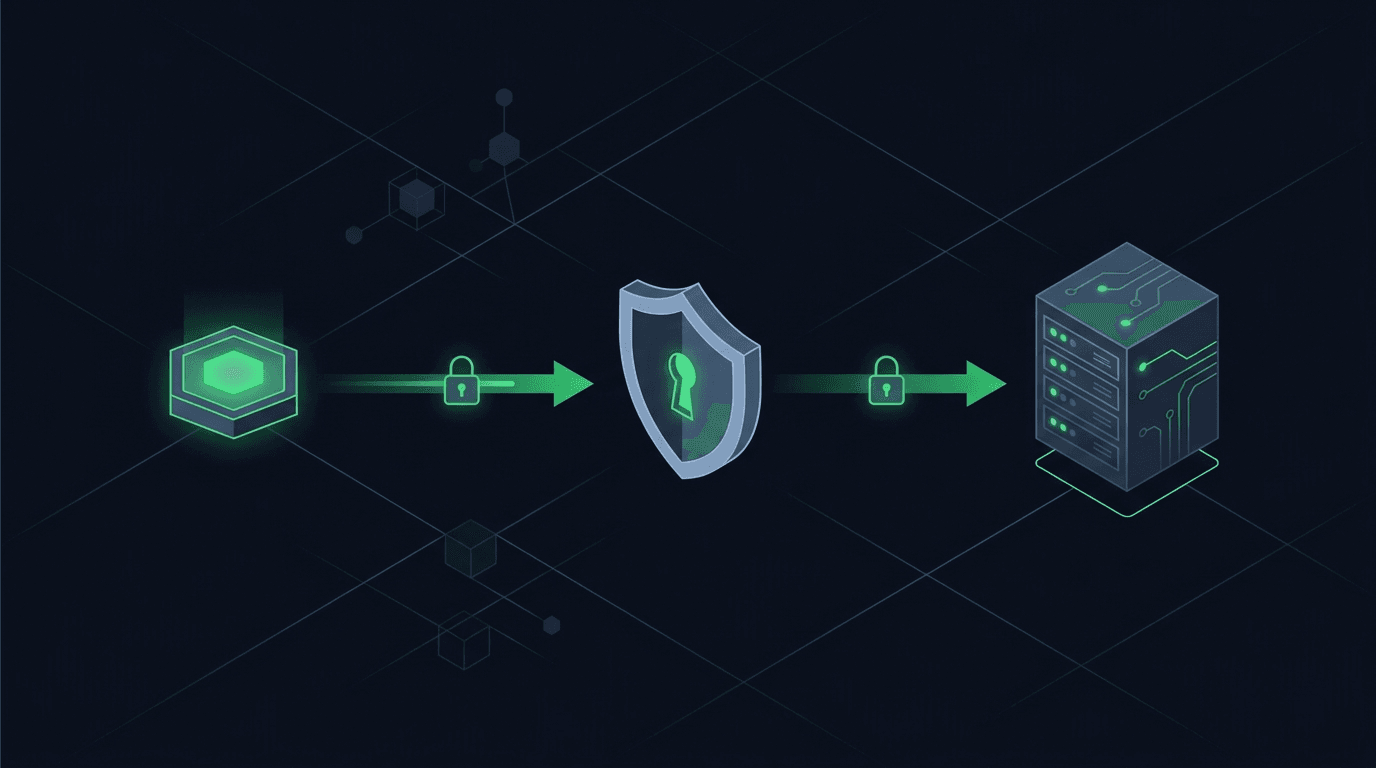
If you run strategies on TradingView and want your alerts to fire real orders, you have probably looked at 3Commas. It is a capable platform, but many traders eventually want a 3Commas non-custodial alternative: something that executes their TradingView signals without holding funds, pooling accounts, or acting as a strategy layer on top of the exchange. This guide explains what "non-custodial" really means for automated trading, how a relay-based approach differs from a full bot platform, and how to move a TradingView-to-3Commas workflow onto infrastructure where your money never leaves your own exchange.
The distinction matters more than it sounds. Two tools can both "automate TradingView alerts," yet handle your keys, your custody, and your risk in completely different ways. Knowing where those lines fall helps you pick the setup you can actually trust.
Custody is about who can move your money. A custodial service holds your funds, or holds keys powerful enough to withdraw them, so you are trusting that company with your balance as well as your automation. A non-custodial design flips this: your capital stays on the exchange where you already keep it, and the automation tool is only ever allowed to place and cancel trades.
In practice, non-custodial automation rests on three things. First, funds remain in your own exchange account the entire time. Second, the connection uses trade-only API keys, so the tool can open and close positions but cannot request a withdrawal. Third, there is no shared or pooled wallet sitting between you and the market. If a tool asks you to deposit, or requests an API key with withdrawal permission, it is not truly non-custodial no matter how it is marketed.
For automated traders this is the difference between a bad day and a catastrophe. A misconfigured strategy or a compromised service can cost you some trades. It should never be able to empty your account.
3Commas connects to your exchange through API keys and can execute logic triggered by TradingView alerts, usually via its bots and its signal bot webhook. The platform layers a lot on top: DCA bots, grid bots, a smart-trade terminal, and portfolio views. For traders who want that all-in-one toolbox, it is a reasonable fit.
The tradeoffs show up in two places. The first is scope: because 3Commas is a strategy platform as well as an execution engine, you are adopting its way of structuring trades, not just its plumbing. The second is trust surface. You are routing signals and API access through a large, multi-tenant platform, so its security posture and its key permissions become part of your risk. None of that is unique to 3Commas, but it is exactly what a non-custodial relay is built to minimize.
A relay does one job: it receives a webhook from TradingView (or from n8n, Make, Zapier, or your own backend) and turns it into an order on your exchange. It is not a strategy platform, a signal seller, or a portfolio manager. You keep the logic in Pine Script or wherever you already build it; the relay just executes what you tell it, quickly and reliably.
That narrow scope is the point. You control the logic. The relay handles the plumbing. Because it only needs to place trades, it connects with trade-only keys and never touches custody. One incoming signal maps to exactly one order, so behavior stays predictable and easy to audit. If you want to compare the broader positioning tradeoffs in more depth, our 3Commas alternative overview walks through where each model fits.
The mental model is simple: a full bot platform tries to be your strategy and your execution. A relay is only the execution layer, and it assumes you already own the strategy.
Moving over is mostly a matter of repointing your alerts. If your strategy already fires TradingView alerts, most of the work is done.
Start by listing what your current bots actually do: which pairs, which order types, and what each alert is meant to trigger. Market orders are the common case and the simplest to reproduce. Next, generate a fresh set of trade-only API keys on your exchange, with trading enabled and withdrawal disabled, and restrict them by IP where your exchange supports it. Never reuse a key that had withdrawal access.
Then connect those keys to SignalToExchange and map each TradingView alert to the order it should place. Rewrite your alert messages as structured webhook payloads — symbol, side, order type, size — instead of 3Commas-specific signal formats. Fire one alert in a test or paper context and confirm the order lands on the exchange exactly once. Only after you have watched a few signals execute cleanly should you disable the corresponding 3Commas bots. Running both in parallel for a short window, on small size, is the safest way to verify parity before you switch fully. Our guide on testing TradingView automation before going live covers a fuller dry-run checklist.
The single most important habit in automated trading is limiting what your keys can do. Trade-only keys, sometimes called trade-enabled or no-withdrawal keys, let a service place and cancel orders but block any request to move funds off the exchange. Combined with a non-custodial design, they mean the worst-case outcome of a compromise is unwanted trades, not a drained balance.
A few practices make this meaningfully stronger. Disable withdrawal permission on every key you connect to any automation tool. Use IP allowlisting so a leaked key only works from the relay's address. Keep separate keys per tool so you can revoke one without breaking everything. And rotate keys periodically, especially after testing or sharing a screen. For a deeper look at how to judge any tool on this dimension, see is it safe to give a trading bot your exchange API keys.
Whichever tool you choose, a few habits keep an automated pipeline dependable:
None of this removes market risk, but it removes the avoidable failure modes — the silent misfires, the over-permissioned keys, the "the alert fired but nothing happened" surprises.
Not exactly. A relay replaces the execution part — turning signals into orders — while leaving strategy design to you. If you relied on 3Commas' built-in DCA or grid bots to generate the logic, you would rebuild that logic in TradingView or your own code first, then let the relay execute it.
Yes. With a non-custodial approach your capital never leaves the exchange account you already control. The relay connects with trade-only keys and can place orders but cannot withdraw. You are not depositing into a shared wallet.
Because it only holds trade-only keys, a compromise could result in unwanted orders but not a withdrawal of your funds. That is the core reason to insist on no-withdrawal keys and IP restrictions for any automation tool, relay or otherwise.
Usually. If your strategy already emits TradingView alerts, you mostly reformat the alert messages into webhook payloads and repoint them. The strategy itself stays where it is.
A relay-based approach commonly supports major venues such as Binance, Bybit, Kraken, OKX, Coinbase, KuCoin, and Bitget. You connect the exchange you already use rather than moving funds to a new one.
If you want your TradingView signals executed by infrastructure that never holds your money, a non-custodial relay is the leaner, lower-trust way to automate. You keep the strategy, you keep custody, and the execution layer simply does what your alerts tell it to. If you are weighing options, our roundup of the best TradingView automation tools puts the relay model next to the full-platform approach so you can decide what fits. Ready to try it? Request access and start your free trial, connect a trade-only key, and watch your first signal turn into an order.
Automated trading involves risk. SignalToExchange is execution infrastructure and does not provide financial advice, trading signals, or guarantees of any kind.

If you have searched for a non-custodial Pionex alternative, you are probably weighing a real trade-off: Pionex bundles trading bots and an exchange into one a...

Weighing a Cornix alternative for automated trading? An honest comparison on signal source, custody, trade-only API keys, and one-signal-one-order execution reliability.

Weighing a WunderTrading alternative for TradingView automation? An honest comparison on custody, trade-only API keys, and one-signal-one-order execution reliability.
Non-custodial execution. Trade-only API keys. Independent infrastructure built for reliability.
Request Early AccessTrade-only API key enforcement. No withdrawal permissions. No custody.